The early era
Royal garden
Spices and tea
See the toursYour group, priced
Side-by-side: 3 options
Pick the party size to see what each of these garden tours costs.
≈
View≈
View≈
ViewAll amounts are from-prices on GetYourGuide, converted at the ECB reference rate. Exact prices are shown at booking.
Quem criou o Jardim Botânico do Rio de Janeiro has a clear answer, a Portuguese prince regent, and a longer story of tea, palms, scientists and public strolls.
Editorial team, botanicalgardenrio.click · Updated November 12, 2026 · Takes 7 min
Facts at a glance
Who created the garden is a question with a short answer. According to the garden's own history, it arose when the Portuguese prince regent, Dom João, chose to install a powder works and a garden where plants from other parts of the world could be acclimatised,2 and it was founded on 13 June 1808.1 The site was practical before it was pretty: a powder works and a plant nursery, side by side, serving a court that had just arrived in Rio.
The idea was not invented in Rio. The garden says botanic gardens began in Europe to study medicinal plants, and that in Portugal the Ajuda garden in Lisbon studied plants from the colonies, mainly those with economic return.6 That background explains the first task in Rio: acclimatising plants that might become crops. Botany in those years was bound up with usefulness, and a garden was a place to test which foreign plants could earn money in a new climate.
The first challenge named by the garden was to acclimatise the so-called spices of the Orient: vanilla, cinnamon, pepper and others.3 Seedlings often travelled for months from other continents, and the work was to improve their transport, build nurseries to sow them and then transplant them into different soils to see how much sun, shade and water each plant needed. That slow, patient craft is the real beginning of what visitors now walk through as a garden.
Who ran it
| Director | Years | What they left |
|---|---|---|
| Frei Leandro | From 1824 | International standing17 |
| Serpa Brandão | To 1851 | The palm alley18,4 |
| Barbosa Rodrigues | Almost 20 years | Herbarium and library19 |
| Pacheco Leão | 1915 to 1931 | Research and journals20 |
Dates as the garden's own history page gives them.8
One of the most interesting early experiments was tea. Under Dom João VI there was a special push for planting Camellia sinensis, from which black tea is made.7 To learn how to grow and process it, the prince regent brought Chinese growers to Brazil for their knowledge of tea cultivation and processing, and the garden was chosen as one of the planting sites.10 The garden even took charge of the stages from growing to consumption.
The harvest was real: in the 1820s and 1830s about 340 kg of leaf was picked each year at the garden.7 Yet the main aim was never a tea shop. The main aim was to produce seeds and seedlings to hand out among the provinces of the empire, encouraging planting for export. The experiment ended without a commercial success, because the flavour was not approved on the international market and the crop declined in the following decades.11
Other crops were tested in the same spirit, such as the straw used to make hats and mulberry trees to feed silkworms, as the history page notes.12 These failures matter to the story because they show the garden doing its job: trying things, recording what worked and moving on. If you walk past the medicinal plants and the spice beds today, you are looking at the heirs of those first trials, now organised for science and education instead of profit.
The garden did not stay a closed workshop. The history page says the arboretum was enlarged so that it could also serve as leisure space for the population, with lakes and waterfalls added and with swamps filled and drained to gain area.28 Rules were set for a kind of leisure different from that of public parks, so that the garden balanced its roles as leisure area and research site.29
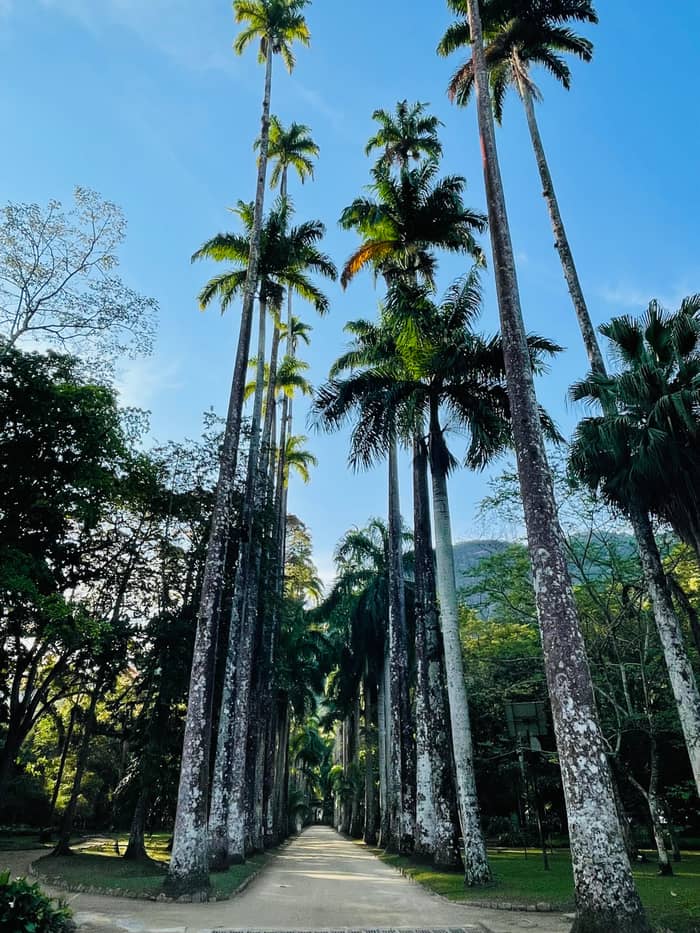
Directors shaped the look of the place. Frei Leandro do Sacramento took over in 1824 and was internationally recognised among European academies.17 After he died in 1829, his disciple Bernardo Serpa Brandão directed the garden until 1851.18 The palmeira imperial do Jardim Botânico do Rio de Janeiro, the royal palm of the alley, is credited to Serpa Brandão as the institution's main symbol.4 A lake in the garden still carries the friar's name, and the legend of the palm seeds belongs to his successor's years.25
A later change of hands brought the public in on set days. When the garden was handed to the Imperial Instituto Fluminense de Agricultura, the contract required that the garden be opened to the public on Sundays and feast days.21 Following the story to the present, the garden's visit today, open daily,30 is the long result of that early decision to share a scientific garden with the city's inhabitants.
Follow the story
Choose the chapter you care about and the garden shows where to look.
If I want the founding story
The gunpowder wall and the medicinal plants
The collection sits within the wall of the old factory.24
If I want the palm legend
The palm alley
The legend says seeds were burned each year.25
If I want tea and spices
The Historic Trail
It has 78 points and about 2h30.26
If I want the science
The orchid and bromeliad houses
The Bromeliário opened in 1975.27
If I want a guide
A listing that names the palms and the old factory
It lists the Avenue of Royal Palms and the old gunpowder factory.
Eras compared
The early era
Spices and tea
See the tours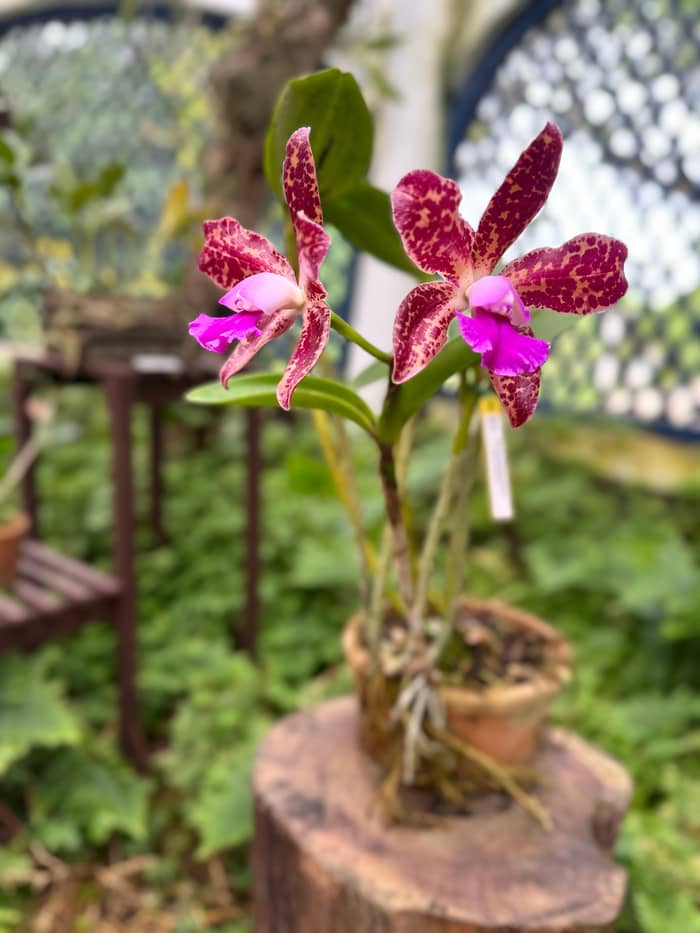
The middle era
Open on feast days
See the tours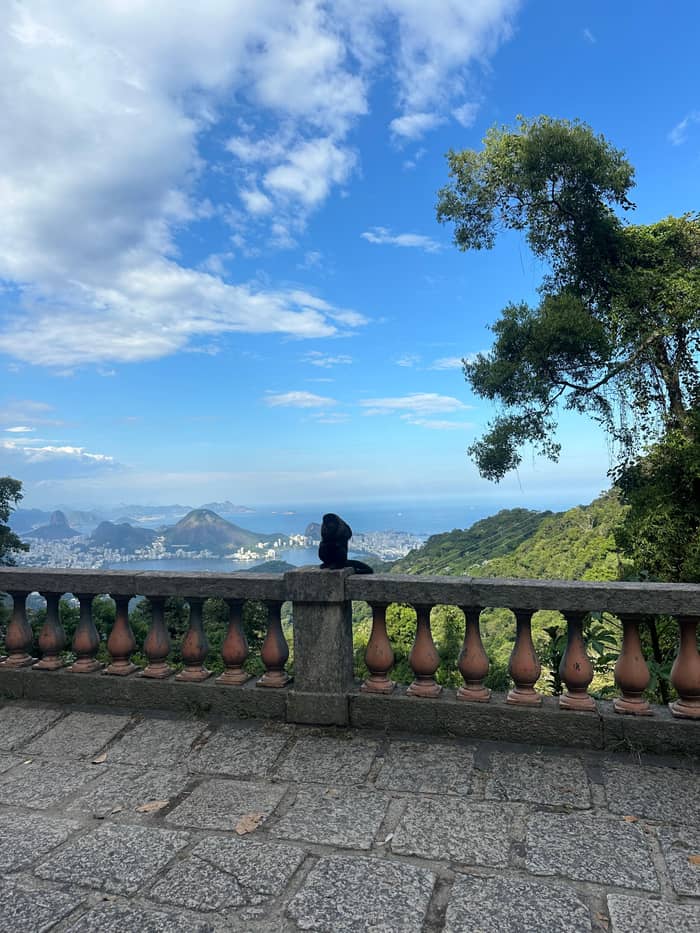
The modern era
Federal body
See the toursIn March 1890 the federal government detached the garden from the agricultural institute and placed it under the Ministry of Agriculture.8 Under the botanist João Barbosa Rodrigues the herbarium and the library were created and the greenhouses and nurseries reorganised, and he stayed in charge for almost 20 years.19 This is the moment when pure botany took the lead from the older mission of useful plants, and when the garden began to look like the research institution it is now.
The look of the grounds kept developing, with sculptures, bridges, pergolas and fountains added to the lake, the alleys and the beds.34 Antônio Pacheco Leão directed the garden from 1915 to 1931,20 and in 1915 the garden launched the Archivos do Jardim Botânico, the first scientific journal in the country devoted only to botany.9 Many details a visitor notices today were laid down in this era.
The garden's scientific standing grew with it. In 1938 it held the First South American Botanical Meeting, with 40 national and foreign institutions and 213 scientists taking part.35 The orchid collection also has roots in this world: the orchid Renanthera coccinea was imported in 1809, a year after the founding,36 and the octagonal glasshouse, built in the English wooden model, was rebuilt in iron and glass in 1930, keeping its original shape.37
The story in order
Founding
Dom João ordered the factory and the acclimatisation garden.2
First crops
Palm alley
The alley of imperial palms became the symbol.4
Republic
The garden moved to the Ministry of Agriculture in March 1890.8
Science
The first botanical journal of the country appeared in 1915.9
Today
The institute name dates from 1995.5
Today the garden is a federal body linked to the Ministry of the Environment and one of the most important botany and biodiversity research centres in the world. It received the name Instituto de Pesquisas Jardim Botânico do Rio de Janeiro in 1995.5 If you search for the Rio de Janeiro botanical garden research institute, that is the formal name of the organisation behind the gates, a scientific body that also happens to welcome the public every day.
The modern research arms are easy to date. The Escola Nacional de Botânica Tropical was created in 2001,22 and the Centro Nacional de Conservação da Flora, the CNCFlora, was created in 2008.23 Culture has a place too, since a strategy of joining culture, environment and science lies behind the Environment Museum and the Tom Jobim Space.38 A commemorative book marked the garden's 200 years.39
The living collections are the part you can see. A thematic collection of medicinal plants lies within the listed wall of the old gunpowder factory and holds about 250 species,24,16 a nice link back to the founding decision. In 1975 the Bromeliário opened as a tribute to the landscape designer Roberto Burle Marx,27 and the garden keeps about 15,000 bromeliad specimens.40 Each collection is a layer of that long story: the orchid house with 470 species,13 the scientific bromeliad set with 530,14 and the cactus house with about 400.15
Video
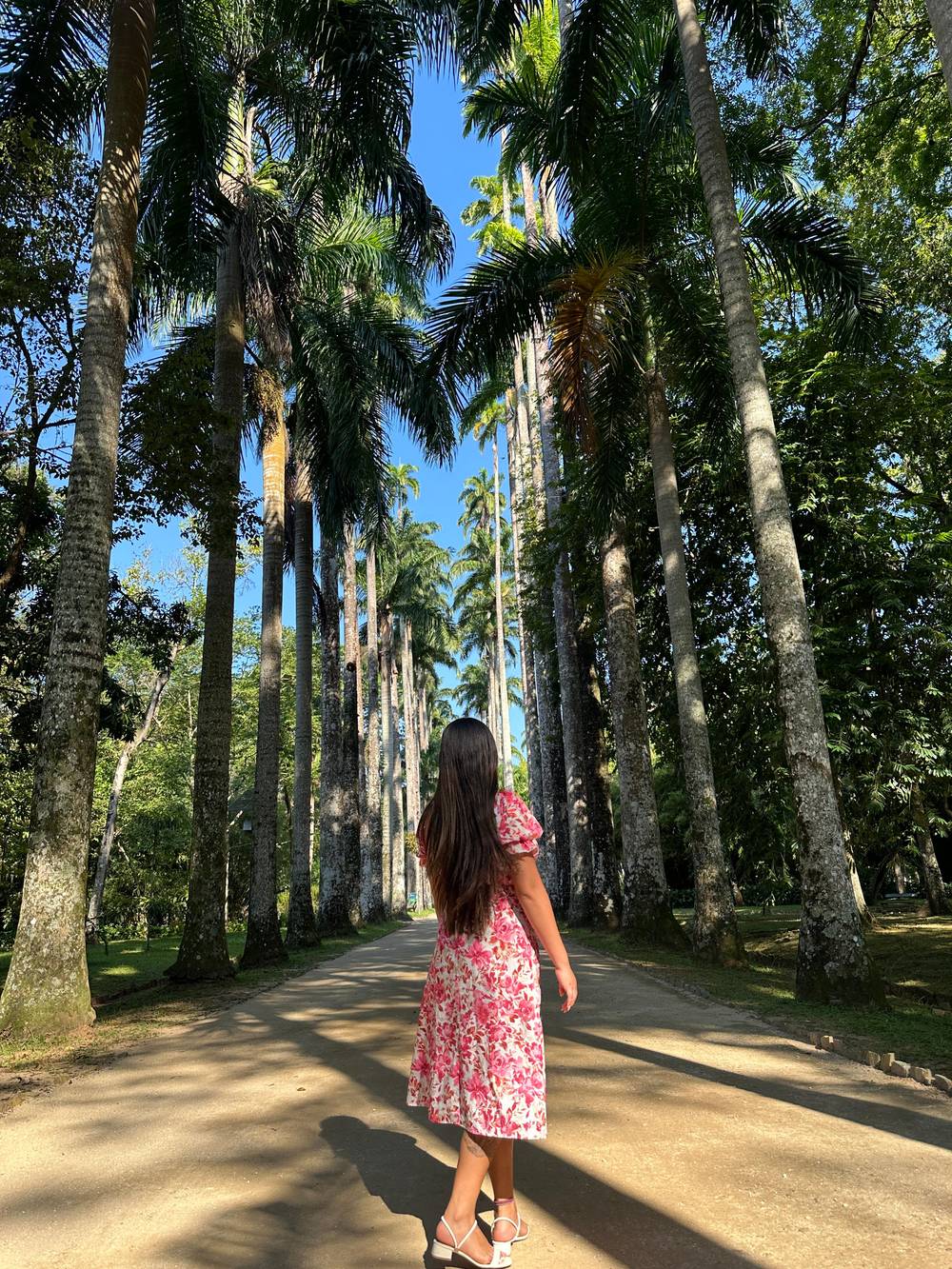
Investing to Travel on YouTube · Until you tap play, no video is loaded.
The first challenge was to acclimatise the so-called spices of the Orient: vanilla, cinnamon, pepper and others
A history walk
You can read the story in the ground. Start at the palm alley, credited to Serpa Brandão, which became the garden's main symbol.4 Then look for the old gunpowder wall around the medicinal plants, where the founding purpose is still visible in the brickwork.24 The self-guided Historic Trail has 78 points and takes about 2h30, a full route through the garden's past, so it deserves a morning of its own rather than a rushed hour between other stops.26
For a shorter dose, join the guided Historic Trail, which runs daily at 10h and 14h except Fridays, and on Wednesdays only at 14h.31 The Friday trails change theme every month and are free,32 so one of them may touch on the garden's story in the month you visit. Ask the Visitor Centre which theme is running before you plan your day around it, since the theme changes monthly while the Friday times stay at 10h and 14h, and bring something to drink because the walk is outdoors.32
If you prefer a guide who also drives, a 4 hour listing for the garden alone names the Avenue of Royal Palms, the old gunpowder factory and the Japanese Garden among its highlights. The site's own 4 hour tour combines the garden with the Vista Chinesa and a trail in the forest. Plan around the hours, which run 8h to 17h at the arboretum on most days.33 Whichever way you go, take a moment at the lake named for Frei Leandro and think of the plants first tested there.
FAQ
He decided to install a gunpowder factory and a garden for acclimatising plants.2
The garden's history page gives that date.1
The history page credits Serpa Brandão with building the palm alley of Roystonea oleracea.4
About 340 kg of leaf was harvested each year in the 1820s and 1830s.7
It has been the Instituto de Pesquisas Jardim Botânico do Rio de Janeiro since 1995.5
It had to open to the public on Sundays and feast days.21
The self-guided Historic Trail lists 78 points with an average duration of 2h30.26
Sources
Planning a day among the palms? Ask a real person.