The wettest
February
Wet and warm
See the toursLocate your stop
Map of 39 stops
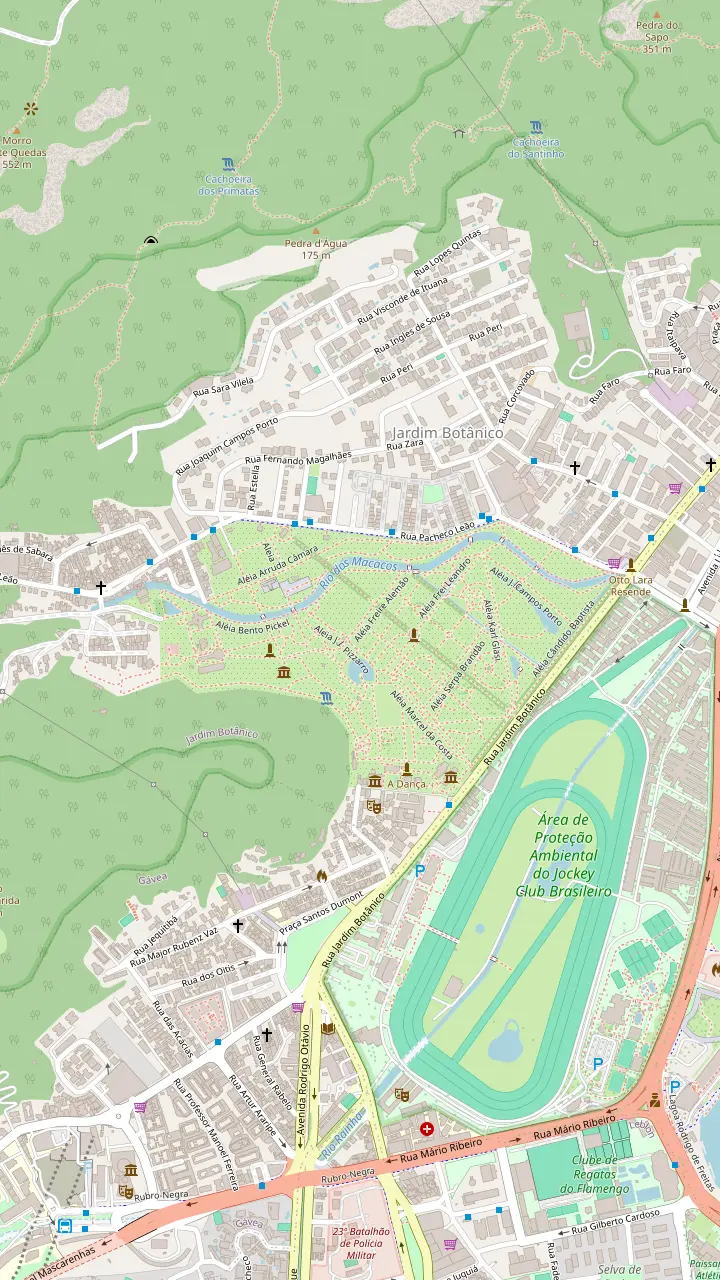
Pick a route, then tap a marker or a stop for notes and a Google Maps link.
A named fountain on the garden map. One 4 hour listing names it among its highlights.
Google MapsThe lake where giant water lilies float and a snake-necked turtle sometimes rests on a pad.
Google MapsThe glass orchid house is an icon of the garden, with an outdoor orchid garden around it.
Google MapsThe Bromeliario honours Roberto Burle Marx and opened in 1975.
Google MapsThe Japanese Garden dates from 1935 and began with a donation of 65 plants.
Google MapsThe Portal of the Academy of Fine Arts was designed by Grandjean de Montigny.
Google MapsThe Sensory Garden is a stop on the 4 hour site tour.
Google Maps
Questions about wheelchairs go to the Visitor Centre before the visit.
Google MapsA named fountain on the garden map. One 4 hour listing names it among its highlights.
Google MapsThe lake where giant water lilies float and a snake-necked turtle sometimes rests on a pad.
Google MapsThe glass orchid house is an icon of the garden, with an outdoor orchid garden around it.
Google MapsThe Bromeliario honours Roberto Burle Marx and opened in 1975.
Google MapsOne of the garden's four greenhouses of orchids, bromeliads, ferns and insectivorous plants.
Google MapsThe Japanese Garden dates from 1935 and began with a donation of 65 plants.
Google MapsThe Sensory Garden is a stop on the 4 hour site tour.
Google MapsThe Casa dos Pilões, a small museum, is named among the points a 5 hour private tour visits.
Google MapsThe most famous turtles live at the Turtle Lake and can be seen in the sun every day.
Google MapsThe Portal of the Academy of Fine Arts was designed by Grandjean de Montigny.
Google Maps
The gate at Rua Jardim Botanico 1008 has ticket offices and is open every day, with bicycle racks.
Google MapsThe Rua Pacheco Leao 101 gate also has a ticket office and is open daily.
Google MapsPraca Santos Dumont has a bike station and city-run metered parking.
Google MapsGarden visitors get a discount on parking here with the stamp from the ticket office.
Google MapsThe free park around the mansion that houses the Parque Lage art school.
Google MapsBus 548 links Botafogo metro station with the garden.
Google Maps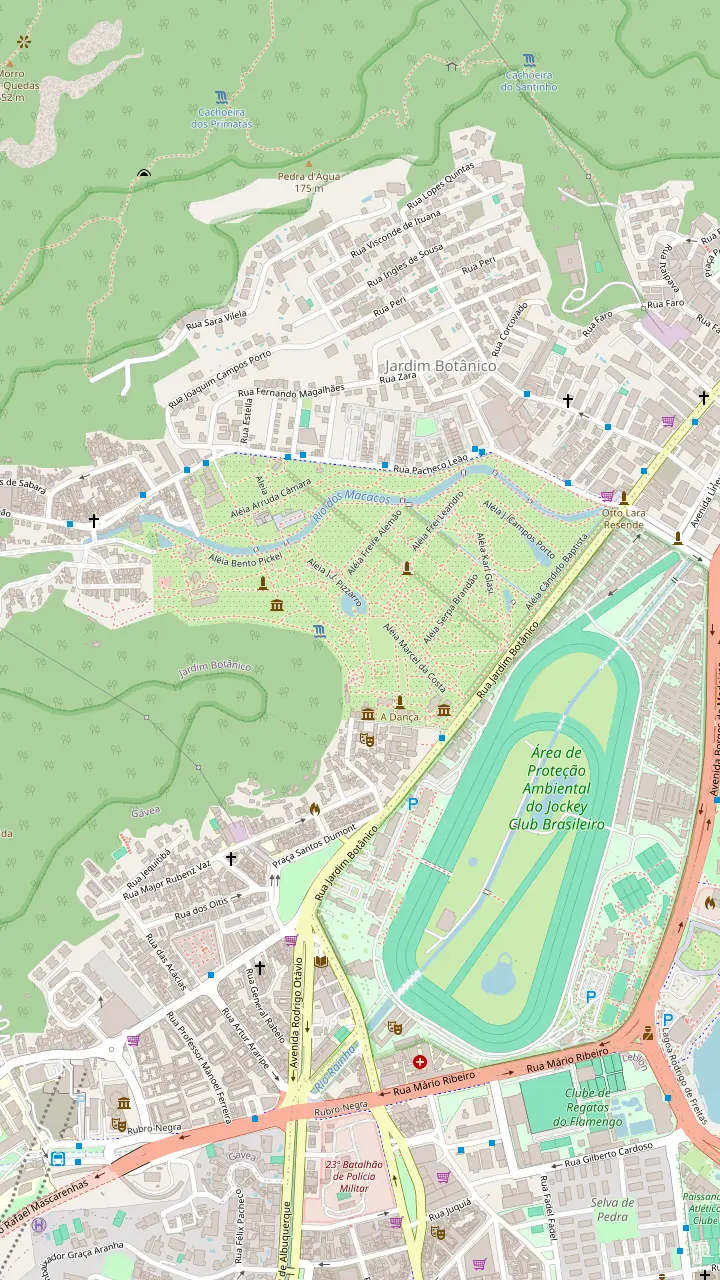
The most famous turtles live at the Turtle Lake and can be seen in the sun every day.
Google MapsThe lake where giant water lilies float and a snake-necked turtle sometimes rests on a pad.
Google MapsThe Japanese Garden dates from 1935 and began with a donation of 65 plants.
Google MapsA named fountain on the garden map. One 4 hour listing names it among its highlights.
Google MapsThe Environment Museum is part of the garden's cultural side.
Google MapsThe Casa dos Pilões, a small museum, is named among the points a 5 hour private tour visits.
Google MapsThe glass orchid house is an icon of the garden, with an outdoor orchid garden around it.
Google Maps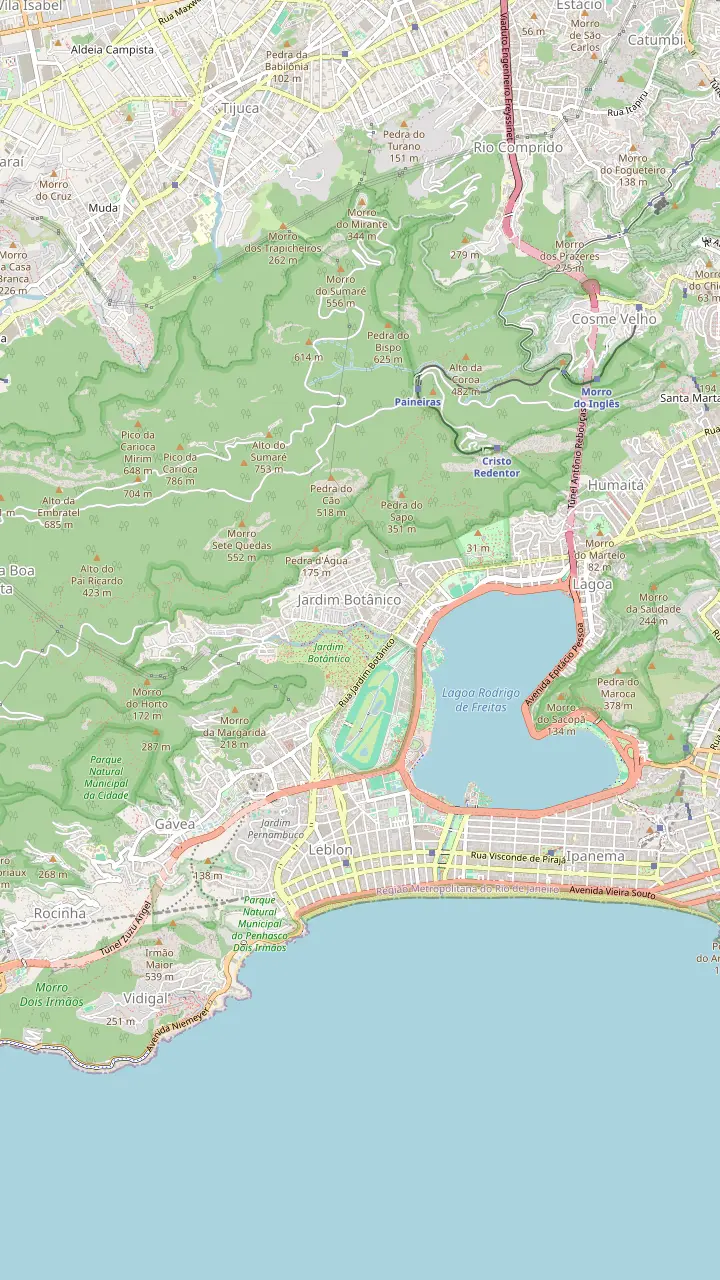
The free park around the mansion that houses the Parque Lage art school.
Google MapsAn aquarium built into the park, which Riotur counts among the park's caves and fish wall displays.
Google MapsThe gate at Rua Jardim Botanico 1008 has ticket offices and is open every day, with bicycle racks.
Google MapsThe Rua Pacheco Leao 101 gate also has a ticket office and is open daily.
Google MapsHorto is the district beyond the Rua Pacheco Leao end of the garden.
Google MapsGarden visitors get a discount on parking here with the stamp from the ticket office.
Google MapsPraca Santos Dumont has a bike station and city-run metered parking.
Google MapsThe path around the lagoon is 8 km long.
Google MapsMapping data © OpenStreetMap contributors
Month-by-month figures from the national weather service, hours that shape the light, and a map of the picture stops from the palm alley to the orchid house.
Editorial team, botanicalgardenrio.click · Updated November 12, 2026 · Takes 7 min
For a garden that lives outdoors, the season matters more than the date on the calendar. The national weather institute, INMET, publishes climate normals for a station actually named Jardim Botânico, listed as code 83796 at 22°58'S and 43°13'W, at an altitude of 5 m.5 The figures below come from its 1961-1990 normals, which are old but are the series INMET publishes for that station, and they describe the pattern of the seasons, not a forecast.5
The pattern is a warm, wet summer and a cooler, drier winter, which is what anyone searching for the temperatura no Jardim Botânico do Rio de Janeiro will find. The maximum temperature normal runs from 30.0 degrees C in January and 30.3 in February down to 24.5 in July,2 while the minimum falls from 22.2 in February to 16.0 in July.3 In other words, even the coolest month is mild for most visitors, and the real difference between seasons is how much rain falls and how long the air feels heavy.
Rain is the second lever. Monthly rainfall normals run from 219.3 mm in February to 82.1 mm in June,1 and the year total is 1,736.5 mm.1 Rio de Janeiro botanical garden weather is therefore summer storms against a quieter winter, with the rainy season shaped by the wet months from December to April and the drier stretch from May to September. Use the table below to see the months side by side.
Month by month
| Month | Max °C | Min °C | Rain mm | Rain days |
|---|---|---|---|---|
| January | 30.02 | 21.83 | 179.81 | 119 |
| February | 30.32 | 22.23 | 219.31 | 109 |
| April | 27.32 | 19.73 | 158.21 | 119 |
| June | 25.22 | 16.83 | 82.11 | 89 |
| July | 24.52 | 16.03 | 110.81 | 79 |
| September | 25.72 | 17.83 | 94.11 | 89 |
| October | 25.82 | 18.93 | 147.51 | 119 |
| December | 29.02 | 20.93 | 178.91 | 129 |
INMET climate normals for 1961-1990 at the Jardim Botânico station, where rain days count 1 mm or more, with some months left out.5,9
Summer is the garden at its most lush and most humid. In January the normal maximum is 30.0 degrees C, with 179.8 mm of rain and 11 days with 1 mm or more,2,1,9 and February is wetter still, so pack for heat and for showers in the same bag. December, like November, has 12 days of 1 mm or more.9 Expect warm air under the canopy, short heavy showers and plants at their greenest. Photographs in this season have deep colours and wet leaves.
Planning for summer is mostly planning for rain. Carry a light waterproof, wear shoes that grip wet paths, and treat a downpour as a pause, not a cancellation: the glasshouses and the covered areas are the places to wait it out. The garden warns that strong winds sometimes damage its very old trees and that the arboretum may then be evacuated, so on stormy days follow the staff and leave quickly without running.10
Summer heat also shapes the day. The hottest hours are better spent in the glasshouses, where the orchid and bromeliad collections stand, than on the open alleys.7 Orchid beds are laid out for staggered flowering,11 so a summer visit still has something in bloom. Start at opening time, when the temperature is lowest, and plan the longer trails before the middle of the day, keeping a bottle of water in your bag and a hat on your head, because the humid air makes even an easy walk feel long.
Rain through the year
January to August of the INMET 1961-1990 normals for the station named Jardim Botânico; the remaining months are in the table above.1
From May to September the garden changes character. Rainfall falls to 128.8 mm in May and to 82.1 mm in June,1 and the number of days with 1 mm or more drops to 7 in May, 8 in June and 7 in July.9 The maximum temperature normal sits between 24.5 and 26.1 degrees C across these months,2 which suits a long trail. If the choice is yours, this is the comfortable half of the year, and a good time for the longer trails that the garden lists on its own page.
The minimum temperature normal in the coolest months is 16.8 degrees C in June and 16.0 in July,3 so a light jacket is enough for early mornings and evenings. Hummingbird sightings thin out in winter, because some species only pass through or lie low, so the cool months have their own wildlife and their own gaps.13 The page on wildlife explains the rest of the animals you can expect to see.
The months between seasons, October and November, bring the rain back: 147.5 mm in October and 158.1 mm in November,1 with 11 and 12 days of 1 mm or more.9 The maximum temperature rises from 25.8 degrees C in October to 26.9 in November.2 These shoulder months give soft light, though the weather can still turn, so keep a layer in your bag. Because the figures are long-term normals, treat them as a guide to the pattern rather than a promise about any single week, and glance at the forecast a few days before you go so that you can swap a garden day with a museum or a beach day if the sky looks wrong.
Pick your timing
Say what you want in the frame and the figures point to a month.
If I want lush, wet greens
February or the summer months
February is the wettest, with 219.3 mm.1
If I want comfortable walking
June or July
The maximum is 25.2 in June and 24.5 in July.2
If I want a quiet morning
A day other than Wednesday
The arboretum opens at 11h on Wednesdays.4
If I want flower close-ups
Late afternoon at the orchid garden
The garden around the glass house opens from 16 to 18 hours.8
If I want a guided photo stop
The tour that includes Parque Lage
The private 5 hour tour stops at the Parque Lage mansion for photographs.
Months compared
The wettest
Wet and warm
See the tours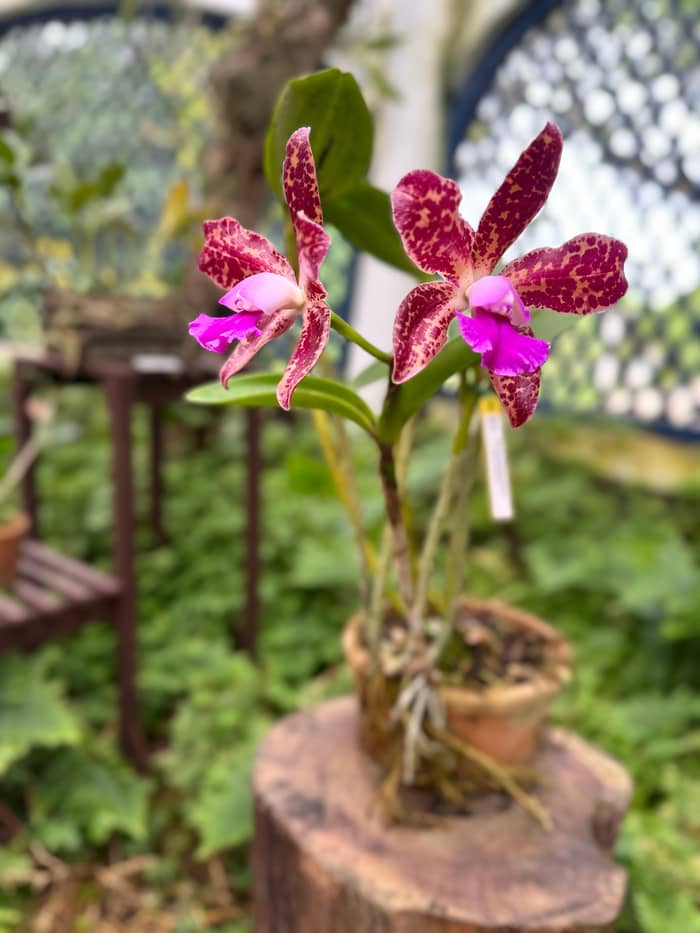
The driest
Mild and dry
See the tours
The shoulder
Between seasons
See the toursPhotographers care about light, and the garden's opening hours decide which light you get. Gate times set the light: from Thursday to Tuesday the arboretum is open 8h to 17h, with a late 11h start on Wednesday.4 That means you can shoot the long, low light of the morning on most days, but you cannot stay for a late sunset, and on a Wednesday you will miss the morning altogether because the garden closes its arboretum for maintenance until 11h.31
Early light is soft and angled, so it suits the palm alley, whose trunks line up like columns. Midday light is high and hard and best used inside the glasshouses, where the glass and the plants soften it. Late in the day the outdoor orchid beds around the glasshouse open, from 16 to 18 hours,8 a period of lower sun that suits close-ups of flowers. Plan your sequence so the right place meets the right light.
Cloud and mist are not a problem here. An overcast day flattens contrast and makes leaf colours richer, and wet foliage after a shower reads as deep green in pictures. Keep the camera in a plastic bag in the rain, let the lens dry before the next shot, and carry a small cloth, because condensation on cold glass and warm air is a common nuisance in a tropical garden. For a trip built around flowers, combine the weather figures above with the glasshouse notes on the what-to-see page.
A day with picture stops
Set the party size and compare the price of each tour with picture stops.
Side-by-side: 3 options
Set the party size and compare the price of each tour with picture stops.
≈
View≈
View≈
ViewAll amounts are from-prices on GetYourGuide, converted at the ECB reference rate. Exact prices are shown at booking.
The light through a day
Opening
On most days the arboretum opens at 8h, which gives the quiet morning light.4
Mid-morning
The palms and water gardens suit the early hours.6
Midday
The glasshouses soften hard light.7
Afternoon
The outdoor orchid garden is opened from 16 to 18 hours.8
Closing
The arboretum closes at 17h.4
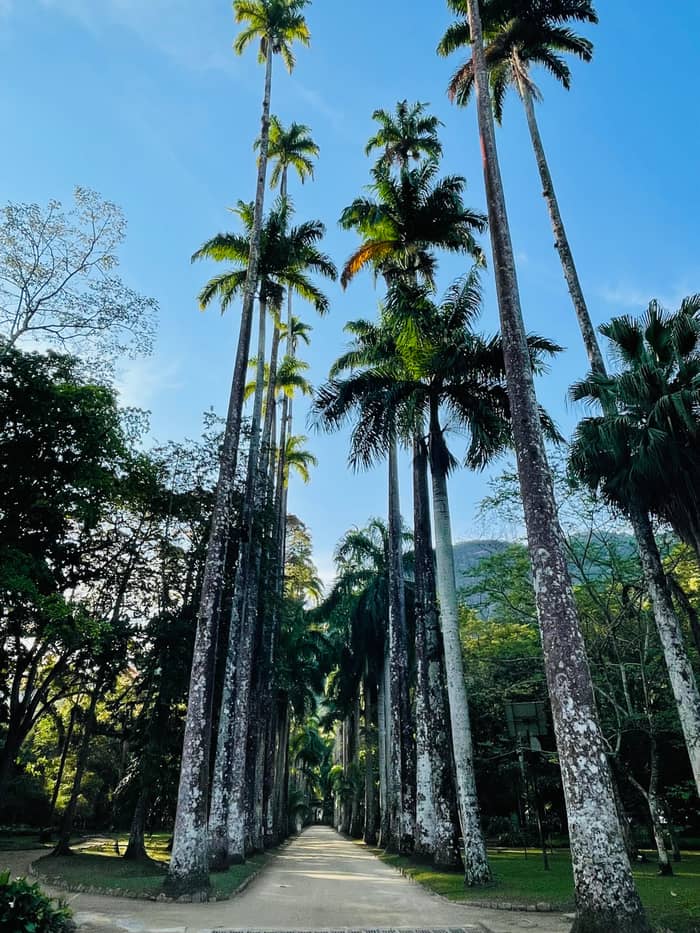
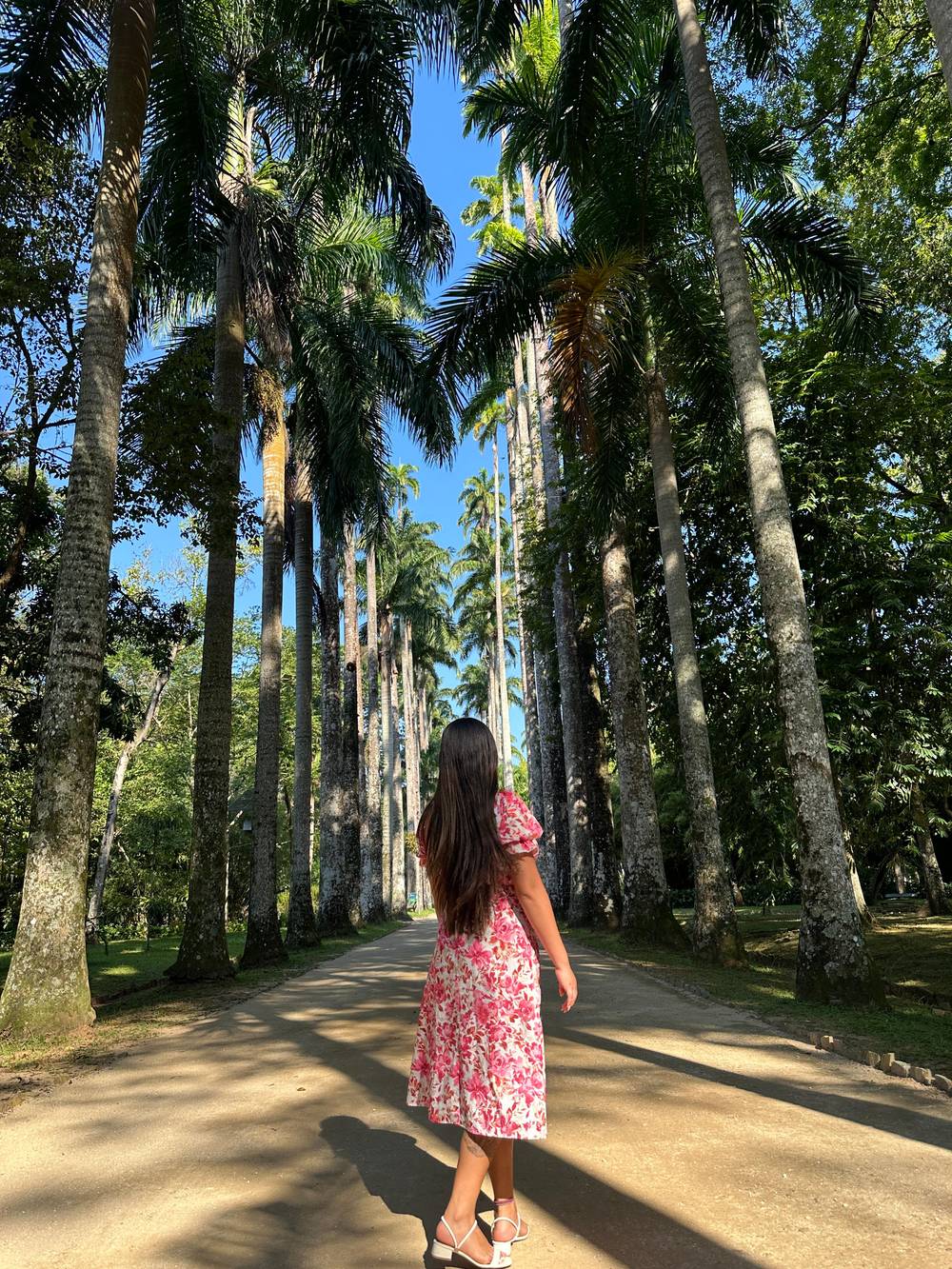
The first picture stop is the one everybody expects: the alley of imperial palms, which the garden calls its main symbol.6 Rio botanical garden palm trees look best from the middle of the alley, looking straight along the line of trunks, with the crowns meeting overhead. Come early and the alley is quiet, which gives you a clean frame. A wide lens lets you include the whole colonnade.
The water gardens offer a second set of pictures. Frei Leandro Lake has giant water lilies,21 the Japanese Garden, set up in 1935 from 65 donated plants,23 lies on the same walk, and the Turtle Lake gives you animals at eye level.24 A tripod is rarely needed in daylight, and a polarising filter helps to cut the glare on the water. The map above numbers every stop in a sensible walking order.
Under glass, the glass orchid house, which the garden calls an icon,8 and the Bromeliário, a tribute to Roberto Burle Marx, dates from 1975.22 Both reward macro lenses and patience. For a change of scale, Riotur names the Echo and Narcissus statues and the Academy portal by Grandjean de Montigny,25 which give the garden an architectural subject among the plants, a welcome change of scale when you have been shooting petals for an hour and want a frame with straight lines and stone.
Video
FRANCISCO RBN on YouTube · Until you tap play, no video is loaded.
The registration of the professional is made with the Visitor Centre of the JBRJ
Camera bag
The garden's published photo rules are aimed at professionals. Professional photography is regulated by JBRJ Portaria 28 of 1 July 2025 and applies to photographers and videomakers doing paid work, such as model books and photos of couples, babies and birthdays.32 Professionals register with the Visitor Centre.12 If you are shooting for a client, do that before you arrive, and keep in mind that a casual family portrait or a few phone pictures are a different matter from paid work and do not fall under that rule.
For personal pictures with a camera or a phone, the published rules do not set special conditions, but the general rules of the garden still apply: do not take or remove plants, do not carve or scratch trees, and do not feed animals.29 The garden asks visitors to follow the guidance of its teams.33 If in doubt, ask the Visitor Centre, which also handles wheelchair arrangements.20 Respect other visitors by not blocking the alley for a long shoot.
Parque Lage, next door, is stricter: photographs with cameras or phones are allowed for personal use only, without tripods, flashes, lights, clothes racks or similar equipment.30 If you plan to combine the two places in one morning, remember that the park's mansion is a popular backdrop and that its rules differ from the garden's. The neighbourhood page covers the rest of the park, including its hours and its trails.
FAQ
INMET's 1961-1990 normal for the Jardim Botânico station gives 219.3 mm for February.1
June has the lowest monthly rainfall normal, 82.1 mm.1
The normal maximum is 30.0 in January and 30.3 in February.2
The arboretum is open 8h to 17h, and on Wednesday 11h to 17h.4
Parque Lage allows personal photos without tripods, flashes or lights.30
INMET lists it as station 83796 at 5 m altitude.5
Sources
Planning a day among the palms? Ask a real person.